
Arrest Warrants in Cleveland County
An arrest warrant lets law enforcement take someone into custody on a criminal allegation. It differs from a search warrant, which permits a search for named evidence, and from a bench warrant, which usually follows a missed court appearance. City courts can issue municipal warrants for local matters. Felony cases in Cleveland County go through the Oklahoma District Court for the 21st Judicial District. The record chain is split. The court issues the order. The sheriff's Judicial Services section then enters each warrant and arranges service and transport. The detention center receives anyone arrested or surrendered.
Probable Cause Under Oklahoma 22 O.S. §171
Oklahoma 22 O.S. §171 anchors the process. A complaint verified by oath or affirmation goes to a magistrate. If the magistrate finds that a public offense occurred and that reasonable ground exists to believe the defendant committed it, an arrest warrant issues. Cleveland County judges work from that statute. It is a court order, not a sheriff-created record.
- A sworn complaint, affidavit, or permitted charging document is presented.
- A magistrate evaluates the stated offense and probable-cause basis.
- The court issues or records the arrest order in the applicable case.
- The sheriff, city police, another peace officer, or partner agency may execute it.
- Booking, initial appearance, bond, or another release decision follows the charge and any other hold.
The statute explains issuance, not a guaranteed processing time or bond outcome.
What the Sworn Complaint Does in a Cleveland County Case
The sworn complaint or affidavit supplies the facts behind the probable-cause call. Beyond it, a court file may hold the charged offense, case number, issuing judge, order date, bond instruction, and later service events. Cleveland County's vendor result is leaner than the file. It offers no photo, DOB block, bond amount, or status code. Rely on the court record for those details.
| Cause or case number | Links the warrant to the court file; OSCN’s visible example is CF-2014-1. |
|---|---|
| Charging offense | Identifies the allegation and classification in the complaint or case record. |
| Issuing court | Shows which judge or magistrate authorized the order. |
| Probable-cause basis | May be in a complaint, affidavit, or related filing subject to access rules. |
| Bond or release instruction | Varies by charge, court, hold, and later appearance. |
| Service and status | Confirm with the sheriff and issuing court because public fields were not verified. |
CCSO Judicial Services Enters and Transports on Warrants
The Cleveland County Sheriff's Departments page describes Judicial Services in operational terms. That unit enters issued warrants. It also serves court-order writs, handles mental-health and juvenile transports, and moves people arrested on warrants or pickup orders from outside the county or state. The sheriff does not control the case. Recall and other court action stay with the issuing court. The page is a departments directory with no person record.
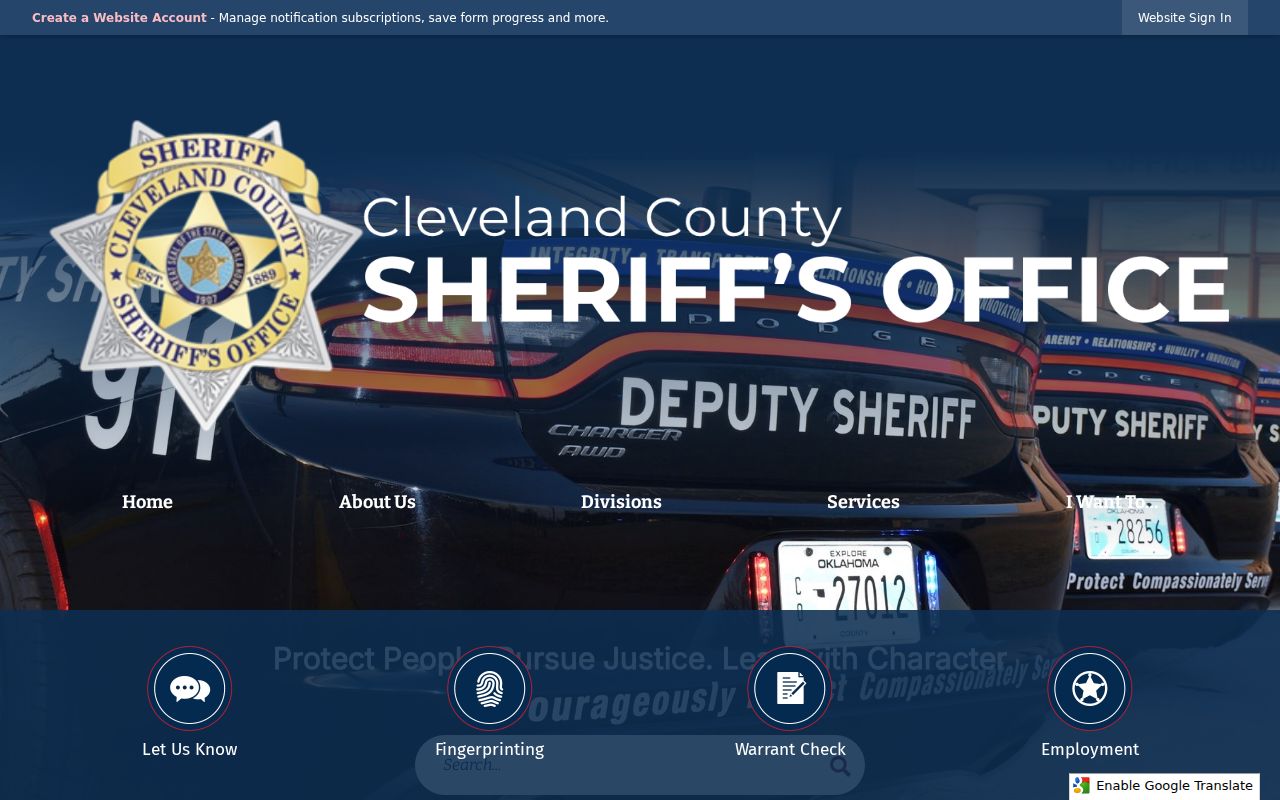
The sheriff's home page links to the vendor search. Cleveland County does not state its coverage or the self-surrender pages' availability.
District Court and Municipal Arrest-Warrant Paths
Felony arrest warrants in Cleveland County run through District Court, the District Court Clerk, and service by the sheriff or other law enforcement. Municipal arrest and FTA warrants stay with the city court and city police. Norman's Municipal Court covers city traffic, non-traffic, and parking matters. Moore handles traffic and non-traffic cases. Noble posts monthly court dates and city payment rules. Lexington lists only a Chapter 13 Municipal Court reference, with no public warrant interface.
| Path | First local contact | Limit |
|---|---|---|
| District Court criminal case | Clerk 405-321-6402; OSCN | Clerk identifies the record but does not promise recall. |
| County sheriff service | CCSO 405-701-8916 for surrender routing | No published walk-in schedule or release promise. |
| Norman city matter | Municipal Court 405-366-5325 | City record is not automatically a county record. |
| Moore city matter | Municipal Court 405-793-5040 | Portal is a citation route, not a complete warrant register. |
| Noble or Lexington | Noble 405-872-9251 ext. 2; Lexington city/police | Local procedures and access differ. |
Self-Surrender Call for a Cleveland County Arrest Warrant
The official CCSO Turn Myself In page lays out a Cleveland County self-surrender route. It tells you to call 405-701-8916, say you need to turn yourself in, and give your name and location. The listed stops are 111 N. Peters Avenue, Sixth Floor, and the F. Dewayne Beggs Detention Center at 2550 West Franklin Road. A separate form adds a number, 405-701-8819. It points to the Chief of Operations for details. Call first. The page states no walk-in schedule, processing time, property list, bond amount, or same-day release. It promises nothing else. An attorney can ask the issuing court about a walk-through, recall motion, or bond. The form maps Cleveland County's official intake route.
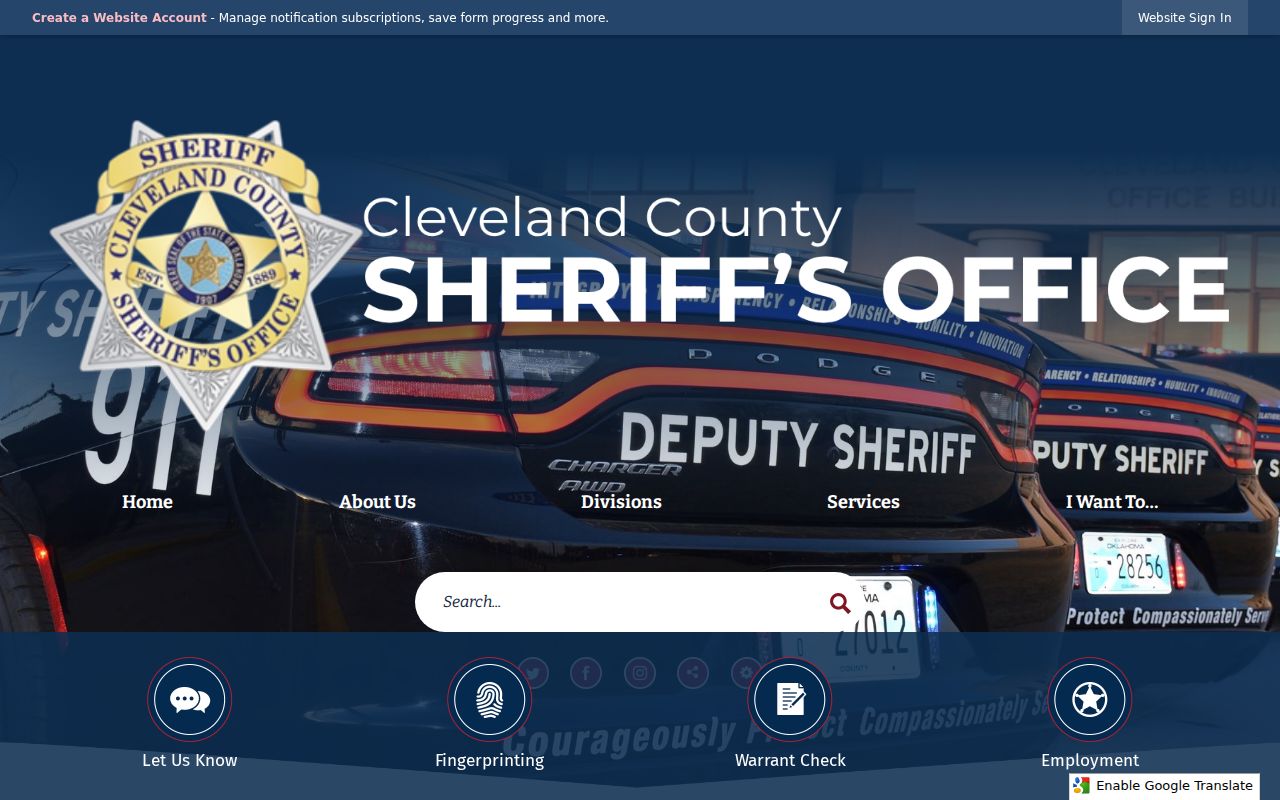
The Cleveland County surrender instruction routes you by phone; turning yourself in does not by itself close the case.
Arrest Warrant Versus a Sealed Indictment
A sealed indictment or sealed warrant in Cleveland County may stay out of ordinary public view until it is served or unsealed. The Oklahoma Open Records Act does not convert a confidential court record into a public roster. Cleveland County keeps sealed matters out of vendor results too. A blank search proves nothing. The order may be sealed, held by another court, delayed in entry, or outside the sheriff's county system. Confirm with the issuing court instead of trusting an empty screen. The District Court Clerk can identify the public case record. Counsel can explain what remains sealed.
Access reminder: Public access, current service status, and a court’s decision to recall an order are three separate questions.
Why a Search Warrant Is a Different Cleveland County Record
A search warrant is a different animal. It lets officers search a named person, place, or thing for specified evidence. Oklahoma 22 O.S. §§1221–1224.2 frame that process. Treat it as its own Cleveland County court record, not an arrest or FTA matter. Unexecuted or sealed material can stay restricted. An executed warrant may later connect to a criminal case that court rules govern. For any property-search question, ask the right court or an attorney about the case record. The sheriff's Warrant Check link does not verify every warrant type.
Out-of-State Pickup and Federal Separation
Extradication has two sides. CCSO handles the Cleveland County side, transporting adults and juveniles arrested on warrants or pickup orders from outside the county and state. That role is narrow. It makes the sheriff no national warrant search. An out-of-state matter belongs to the demanding jurisdiction, and a federal matter routes through the Western District of Oklahoma and federal agencies. PACER can show public federal docket activity. Sealed criminal matters may not appear there, and PACER is not a complete public federal warrant register. Ask an attorney to separate a county, state, municipal, or federal order before you appear.
U.S. Marshals Western District
Federal warrant and transport agency
405-231-4206
Resolving Before Arrest
Confirm the court first. Then talk to a lawyer. The District Court Clerk can identify the case record, but the Clerk cannot promise a recall or a release. CCSO will explain the self-surrender route. Its public page does not spell out the outcome for every warrant. Moore's FAQ gives a municipal example: a person may receive a new date at home, or may be processed at jail for initial appearance, bond, and release. Read that as one city's range, not a Cleveland County guarantee.
Safety note: Call the official office before traveling, keep the citation or case number ready, and ask counsel whether a walk-through, bond, motion, or court appearance is available.
Keep every paper. Save the order, receipt, release paper, or docket entry from any action in Cleveland County. Ask when the sheriff and court systems will reflect it, since bond only secures a future appearance and does not dismiss the underlying case.
Arrest-Warrant Access Under Oklahoma Law
CCSO sends general public-record requests to ccsorecords@clevelandcountyok.com. Its Records page lists a $5 report-copy price. It posts no arrest-warrant search fee, response deadline, or complete result schema. A requester in Cleveland County can identify the record, ask for available portions, and ask why any part is withheld.
Key rules:
51 O.S. §24A.5 generally opens public-body records subject to exceptions.
51 O.S. §24A.8 addresses law-enforcement records and statutory limits.
10A O.S. §1-6-102 protects juvenile records unless an exception applies.
Some files stay closed. Sealed, juvenile, investigative, and out-of-county material may not be public. Confirm live arrest-warrant status with the Cleveland County issuing court or sheriff.
Federal Court and PACER Reference
Federal warrant questions belong to the Western District and federal agencies. The official federal office and PACER pricing pages are references only. They are not Cleveland County warrant results.
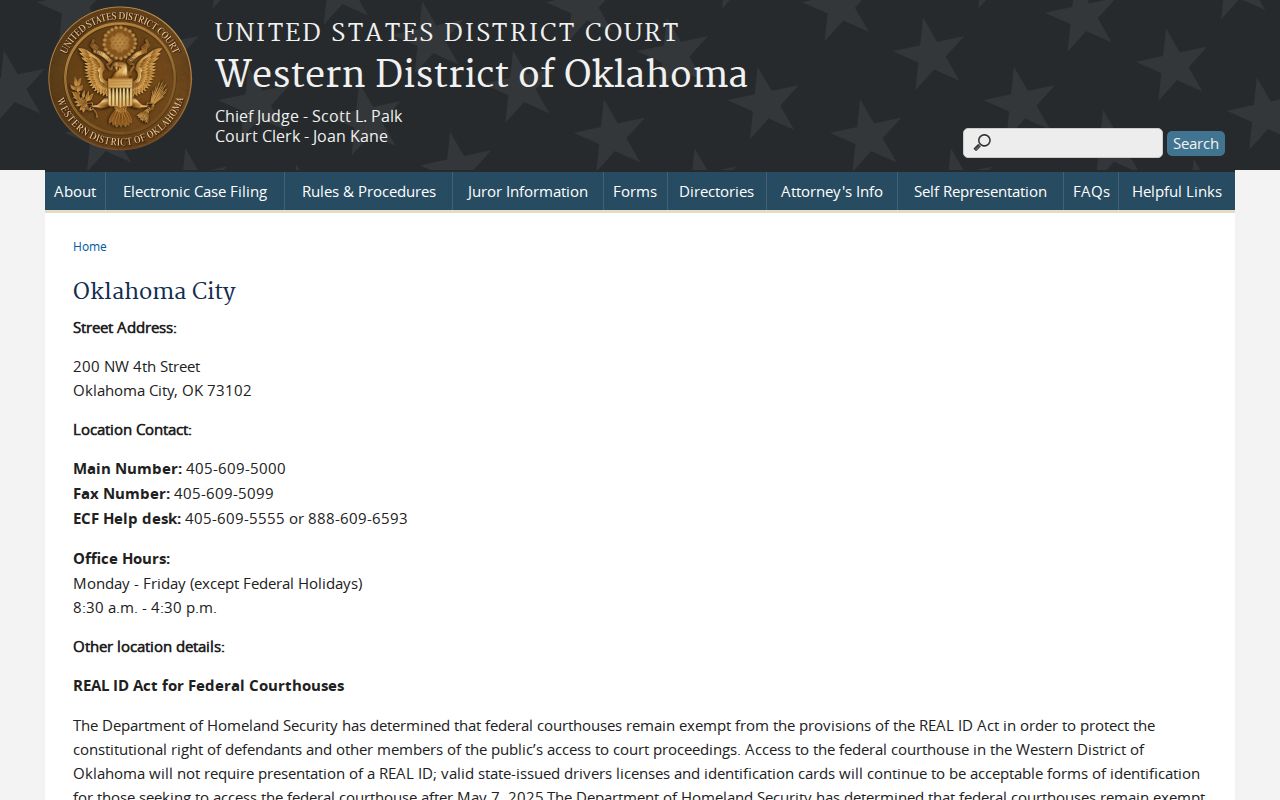
Use the federal court route for a federal matter.
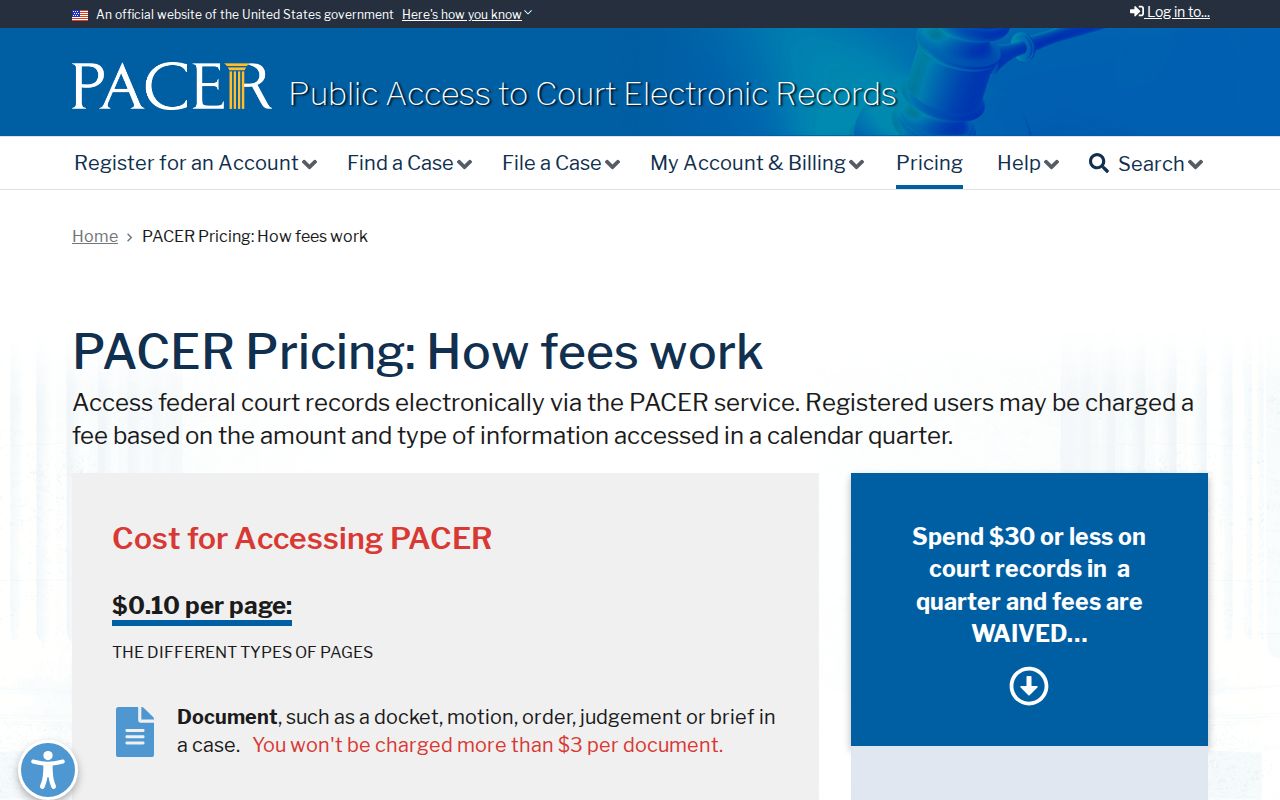
PACER fees and sealed-docket limits apply.